
Environmental Communication
and Green Claims
Communicating sustainability requires clear, specific claims supported by verifiable evidence.
Environmental claims have become an increasingly important part of communications about products, services and organisations. Terms, symbols and messages referring to sustainability, reduced environmental impacts or environmental benefits must accurately reflect the characteristics being claimed and be supported by relevant, verifiable evidence.
From 27 September 2026, the provisions introduced by Italian Legislative Decree No. 30 of 20 February 2026, which transposes Directive (EU) 2024/825 and strengthens consumer protection against greenwashing, will apply. Companies therefore need to carefully assess not only the wording used, but also the scope of each claim, the way it is presented and the robustness of the supporting documentation.
What are Green Claims and why do they require attention?
Green Claims, or environmental claims, are messages or representations used in commercial communications to state or imply that a product, service, brand or company:
- has a positive or zero impact on the environment;
- is less harmful to the environment than alternatives;
- has a specific environmental characteristic;
- has improved its environmental performance over time.
A claim may be expressed through text, images, symbols, labels, trade names or a combination of these elements. It may appear on packaging, labels, websites, advertising campaigns, marketing materials, reports and social media channels.
The accuracy of an environmental claim does not depend solely on whether the underlying data are correct. The message must also be clear, specific and proportionate to the available evidence. Information relating only to the packaging, a component or one stage of the life cycle should not be presented as though it described the entire product.
Which environmental claims carry a higher risk of greenwashing?
The risk of greenwashing increases when communications attribute environmental characteristics to a product or organisation that are broader, more absolute or more significant than those that can actually be demonstrated.
Particular attention should be paid to:
- generic environmental claims, such as “green”, “eco-friendly”, “sustainable”, “environmentally friendly” or “nature-friendly”;
- claims referring to an entire product or organisation when the evidence relates only to a component, the packaging, a process or a specific area of the business;
- sustainability labels that are not based on certification schemes meeting the applicable requirements or are not established by public authorities;
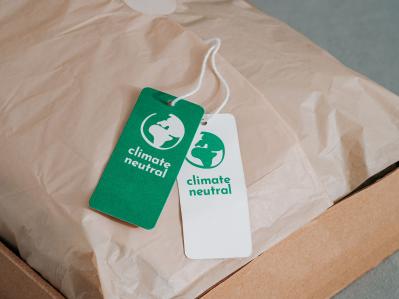
- product-related climate claims stating that a product has a neutral, reduced or positive impact in terms of emissions based solely on carbon offsetting;
- claims about future environmental performance that are not supported by a realistic, publicly available and verifiable plan with measurable targets, deadlines and allocated resources;
- environmental benefits already required by law presented as distinctive features of the product or service;
- environmental comparisons that do not clearly explain the methodology used, the subject of the comparison or the conditions considered;
- outdated or inconsistent data across packaging, websites, marketing materials, reports and social media.
The issue is not whether companies should communicate sustainability, but how accurately they do so: every claim must clearly indicate what it refers to and be supported by evidence that is appropriate to the meaning conveyed to the recipient.
What changes for Green Claims from 27 September 2026?
Italian Legislative Decree No. 30 of 20 February 2026, which transposes Directive (EU) 2024/825 and amends the Italian Consumer Code, entered into force on 24 March 2026. Its provisions apply from 27 September 2026 and strengthen the rules against unfair commercial practices linked to the green transition.
The most relevant aspects for environmental communication include:
- a ban on generic environmental claims where the company cannot demonstrate recognised excellent environmental performance relevant to the claim;
- a ban on extending a benefit relating only to a specific aspect to the entire product or the company’s entire business activity;
the regulation of sustainability labels; - a ban on claiming, on the basis of greenhouse gas emissions offsetting, that a product has a neutral, reduced or positive environmental
- impact in terms of greenhouse gas emissions;
- stricter requirements for claims relating to future environmental performance;
- greater transparency in environmental comparisons between products or suppliers.
Companies should therefore review environmental claims that have already been published and introduce a review process for future claims, involving marketing, sustainability, quality, regulatory, packaging and legal functions.
What evidence is needed to support a Green Claim?
There is no single document that can substantiate every environmental claim. Evidence must be selected according to the subject of the claim, the product, the process, the scope considered and the type of environmental benefit being communicated.
Depending on the specific case, supporting documentation may include, for example:
- EU Ecolabel and other recognised environmental labels;
applicable certifications and schemes, as well as LCA studies, - EPDs, Carbon Footprint assessments, etc.;
- supply-chain data and raw-material traceability information;
- test reports, analytical results and technical specifications.
The existence of data, certification or a study does not automatically make every related message compliant. Documentation must be complete, up to date, verifiable and relevant to the claim. The scope must also match: evidence relating to a material, packaging or a single stage cannot automatically substantiate a claim covering the entire product or its life cycle.
How to assess the compliance of an environmental claim
The assessment of a Green Claim should consider both the wording of the message and the robustness of the evidence used to support it.
Formal compliance assessment
The formal assessment verifies whether the environmental claim is appropriate in relation to the applicable legislation and standards. In particular, the analysis considers:
- the terms used and any qualifications accompanying the claim;
- the qualifications and scope of the claim;
- the use of symbols, labels, icons and graphic representations.
Substantive assessment of supporting documentation
The substantive assessment examines the technical documentation provided in support of the claim, such as environmental certifications, test reports, studies and supply-chain information.
The evidence is assessed in terms of completeness, suitability and relevance to the claim and to the applicable legislation and standards. The analysis helps identify missing information, inconsistencies or documents that are insufficient to substantiate the proposed wording.
Considering these two levels together helps prevent a formally compliant claim from lacking adequate evidence or, conversely, valid data from being communicated through wording that is too generic or potentially misleading.
When should Green Claims be reviewed?
A review is particularly useful:
- before launching a product or a new product line;
- before printing or updating packaging;
- when preparing advertising campaigns and point-of-sale materials;
- before publishing web pages, product sheets, brochures or social media content;
- when preparing sustainability reports and ESG communications.
A preventive review helps identify potential issues before publication, verify alignment between different company functions and determine which claims can be retained, amended or supported with additional evidence.
How TentaConsult Italia supports environmental communication
TentaConsult Italia supports companies in reviewing and assessing environmental claims relating to products, packaging and organisations. The service is modular and can cover websites, packaging, labels, brochures, reports, marketing campaigns, sales presentations and social media channels.
Formal assessment, substantive assessment and technical opinion
We assess the formal compliance of environmental claims against the applicable legislation and standards, while also evaluating the completeness, consistency and adequacy of the technical documentation provided by the company.
At the end of the assessment, we issue a technical opinion on the adequacy of the environmental claim, highlighting any anomalies, gaps or inconsistencies identified.
For each issue identified, we provide practical recommendations on how it can be addressed, specifying, where applicable:
- whether the claim should be retained, amended or removed;
- possible alternative wording for the message;
- additional documentation or adjustments required to substantiate the claim.
From claim review to building supporting evidence
Where the available documentation is insufficient, the assessment can be complemented by technical and consulting services designed to generate or strengthen the environmental evidence:
- Organisational Carbon Footprint, in accordance with ISO 14064-1
- Product Carbon Footprint, in accordance with ISO 14067;
- Life Cycle Assessment (LCA) for products, materials and packaging, in accordance with ISO 14040 and ISO 14044;
- support in preparing EPDs in accordance with ISO 14025 and the applicable programme rules;
- support for environmental self-declared claims in accordance with ISO 14021 and other applicable references;
- preparation of documentation and coordination of any independent verification or validation activities.
You may also be interested in






FAQ
Will words such as “green”, “eco-friendly” or “sustainable” be banned?
They are not banned across the board. However, their use as generic environmental claims is permitted only where the company can demonstrate recognised excellent environmental performance relevant to the claim. Where the benefit relates to a specific aspect, the message must make clear, within the same medium, which characteristic and scope the claim refers to.
Can an environmental claim about packaging be applied to the entire product?
No, if the evidence relates only to the packaging. The message must clearly define its scope, for example the material, a component, a percentage of recycled content or a specific characteristic of the packaging. Presenting the benefit as applying to the entire product may be misleading.
Is ISO 14001 certification sufficient to describe a product as “sustainable”?
No. ISO 14001 concerns the organisation’s environmental management system and does not automatically demonstrate a specific environmental performance of the product. The claim must be supported by evidence relevant to its subject, such as product data, LCA studies, Carbon Footprint assessments, EPDs or other applicable references.
Is it possible to claim that a product is “carbon neutral” based on carbon offsetting?
From 27 September 2026, it is considered an unfair commercial practice to claim, on the basis of greenhouse gas emissions offsetting, that a product has a neutral, reduced or positive environmental impact in terms of greenhouse gas emissions. Actual reductions achieved throughout the life cycle must be distinguished from any offsetting activities, and consumer-facing communications must be revised accordingly.
How long does a Green Claims assessment take?
Timelines depend on the number of claims, the materials and communication channels to be reviewed, the complexity of the claims and the availability of technical documentation. The scope and activities are therefore defined before the project begins.